
What I've Learned from Spending Time in Madeira, Portugal
What my in-laws taught me about living well & my favorite places to visit/foods to eat

Hi everyone!! If you are already familiar with my page, then you know that I was recently on vacation in Madeira with my in-laws. Thank you to all of those who supported me and sent me so much love while I took some time off during that period. And if you are new here, Welcome! I am very excited to share my journey with you.
Every time I go to Madeira, it is such an excellent reset experience for me, and I always leave feeling so much more wholesome about life. My in-laws live a drastically different lifestyle from the one I grew up in (was mainly raised in America), and every time I visit, I feel like there is something new for me to learn.
Madeira is technically not a “blue zone,” but personally, I’ve watched the documentaries, and I feel like, particularly the area where my in-laws live, Ribeira Brava, fully embodies the qualities of a blue zone.
There is such a strong sense of community, slower living, movement, homemade food, purpose, and connection woven into everyday life.
So during my time of reflection, I wanted to share the lessons I learned from my most recent trip to Madeira. Afterwards, I will also share some tips and recommendations for visiting Madeira as a tourist.
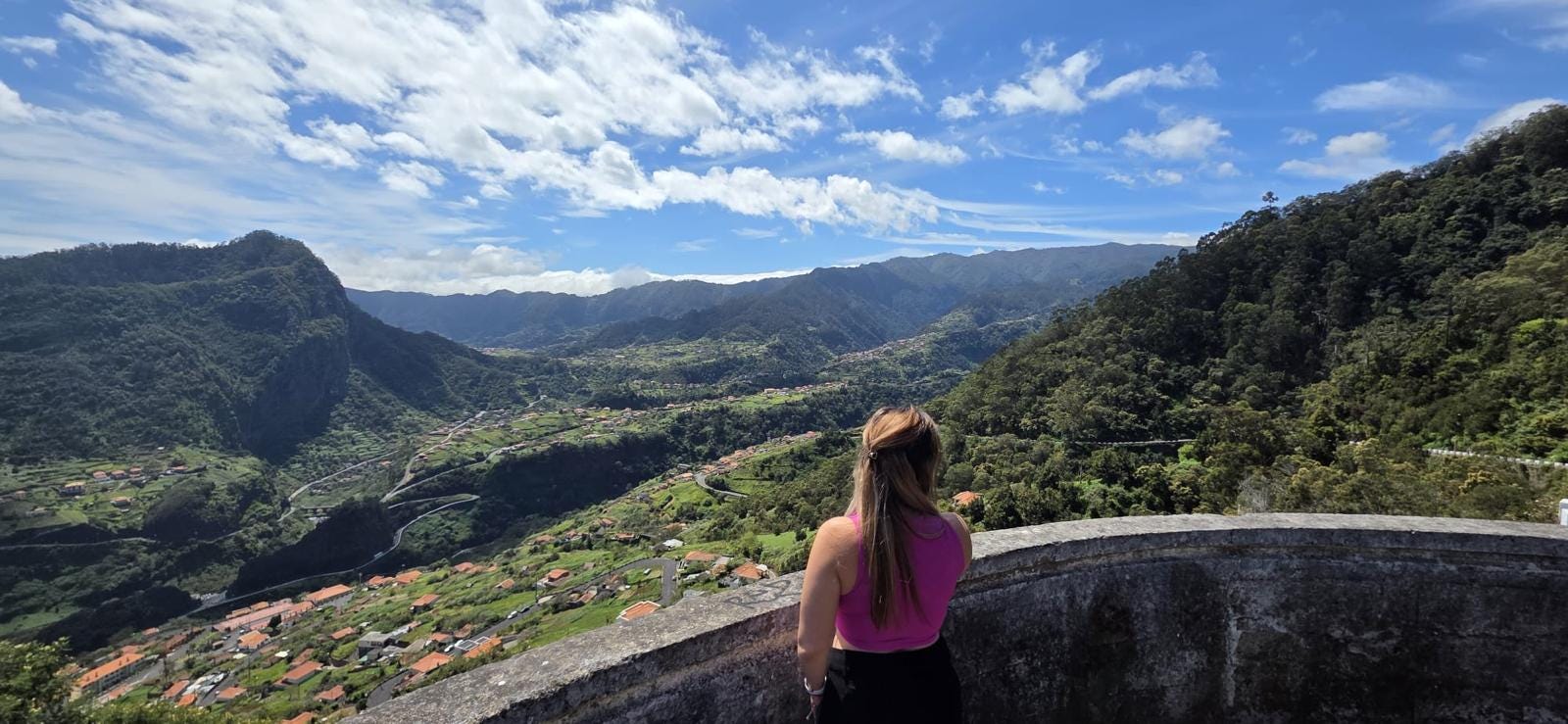
As I mentioned, when I travel to Madeira, I am fortunate to experience life as a local and become fully immersed in the Madeira experience. As Tony Robbins often says, full immersion is the best way to rewire your brain and body, and every time I leave Madeira, I feel a greater sense of calm and a much more regulated nervous system than when I arrive. Here are some of the lessons I have learned from my in-laws.
1. It’s the simple things that matter most
After dinner, almost every evening, we sit around the table and play family card games and /or dominoes (and by the way, these are much more complex card games than the ones I learned growing up).
This was a shocking experience for me, who is used to everyone going their own way after dinner, if they even have dinner together. Most people turn on Netflix, scroll on their phones, or disappear into separate rooms. But for my in-laws, sitting together after dinner is just… normal. It’s how they’ve always done things.
And I can’t even explain the level of bonding and belonging I felt from participating in these little nightly rituals. The jokes, the teasing, the side-eyes during the games, the competitiveness, the conversations that naturally flowed while we played — it created a type of connection that you just can’t get from watching Netflix or YouTube videos.
And in addition to this, it’s also such a protective habit for the brain. In a recent article by Lara | Strength in Wellness (Link Here), she explains how brain games don’t actually provide cognitive benefits unless they are played in social settings. And without knowing all of this scientific research or data, and just intuitively, this is how my in-laws live.
2. Perfectionism takes you out of the moment
Every time I go to Madeira, my in-laws love to teach me to make something new. Last time it was wine, this time it was traditional Madeira cookies called Broas de Mel. We were making a huge batch of cookies because, well, a lot of people wanted us to bring them back cookies. So once the dough was ready, the four of us — my boyfriend, his siblings, and I — started rolling the dough into little balls for the oven.
The three of them were doing it so naturally and effortlessly. Meanwhile, I was there sweating, overthinking every movement of my hand, trying to perfect the amount of pressure I was using, trying to “do it right”… and my dough balls were coming out absolutely terrible.
Finally, after they kept insisting I loosen up, I stopped trying so hard! I stopped overthinking it and I just…. rolled the damn dough! And well, my cookies started coming out perfect!
This made me reflect. I think many of us were raised in such a performance-based society that we constantly feel pressure to optimize, perfect, and prove ourselves. That’s exactly what I was doing in that moment. I didn’t want to disappoint my in-laws or be “bad” at making cookies, so instead of actually being present in the experience, I turned it into a performance, an “opportunity” to prove my worth.
I was trying so hard to get it right that I disconnected from the natural flow of it completely.
And I realized, how often do we do this in life? We grip too tightly. We overcorrect ourselves. We overthink. We pressure ourselves into exhaustion trying to perform perfectly, and in the process, we lose ease, creativity, and presence.
I feel I am taking this lesson with me as I continue to create in my favorite form of art: Writing!
Instead of obsessing over every sentence before it’s even finished or editing myself to conform to expectations or performance standards, I am allowing more space for the words to flow out naturally, for things to come out authentically imperfect, and to let it be.


3. There is value in homemade
One thing I noticed again and again in Madeira is how much pride my in-laws take in making things themselves.
They genuinely do not love going out to restaurants because, to them, nothing tastes as good as homemade food. And well, to be honest, only my mom’s cooking can compete with theirs.
For context, they have a small farm. What I’ve observed is that when you plant something yourself, care for it, watch it grow, harvest it, and then turn it into a meal, there is naturally a completely different level of appreciation attached to it.
For example, my brother-in-law grows his own spicy peppers and then prepares this homemade dipping sauce from them. He was so proud to show me the process of how he makes it, starting from caring for the pepper tree all the way to mixing the ingredients in the kitchen. Then my sister-in-law got really into blueberries — I’d like to think thanks to me 😅— and she proudly showed me the tiny blueberry plant she recently added to the yard after researching how to care for it herself. She’s very optimistic it will grow abundantly, so she can send me some to Lisbon 🥰.
One night, we had a blackberry tart made entirely from blackberries they grew themselves, and there was such a deep sense of pride and appreciation around that dessert because it wasn’t just “food.” It represented time, care, patience, effort, and connection to the land.
Every evening with dinner, we had a glass of wine that we had made together last year during my visit, and I gotta say, I’ve never tasted such delicious wine in my life😋.
Of course, not all of us have farms or the ability to grow our own food, but I do think we sometimes live in such an automated world that we forget the satisfaction that comes from creating things ourselves.
Whether it’s making your own food, learning a skill, growing herbs on your balcony, baking bread, or even writing something from your heart instead of consuming endlessly — there is something deeply human and fulfilling about participating in the process of creation.
4. Homegrown food really is so much healthier
It’s fascinating to me how healthy many of the older members in their community are, despite not fitting into what modern culture would consider the image of “health” or “fitness.”
My parents-in-law, for example, are both well into their 70s. They love food. They do not care about dieting, protein intake, step counts, or wellness trends. They eat potatoes, rice, homemade bread, drink wine almost daily, and my mother-in-law never says no to a sweet treat. By modern standards, neither of them would be considered particularly “fit.”
And yet… they are incredibly healthy.
No diabetes. No hypertension. No heart disease. Their cholesterol isn’t even slightly elevated. As a nurse who worked primarily with the elderly population, this is remarkable to me because I am so used to seeing most people over 70 managing AT LEAST one chronic condition.
And I really do think this says something important about the way food is grown and consumed.
Most of the food my in-laws eat is either grown by them or traded locally with other farmers and members of the community. They eat very little, if any, ultra-processed food. Most of their meals are made from simple ingredients that come directly from the land, not from factories.
And, spending time there makes me question how much of modern disease is connected not just to what we eat, but to how it is made and processed.
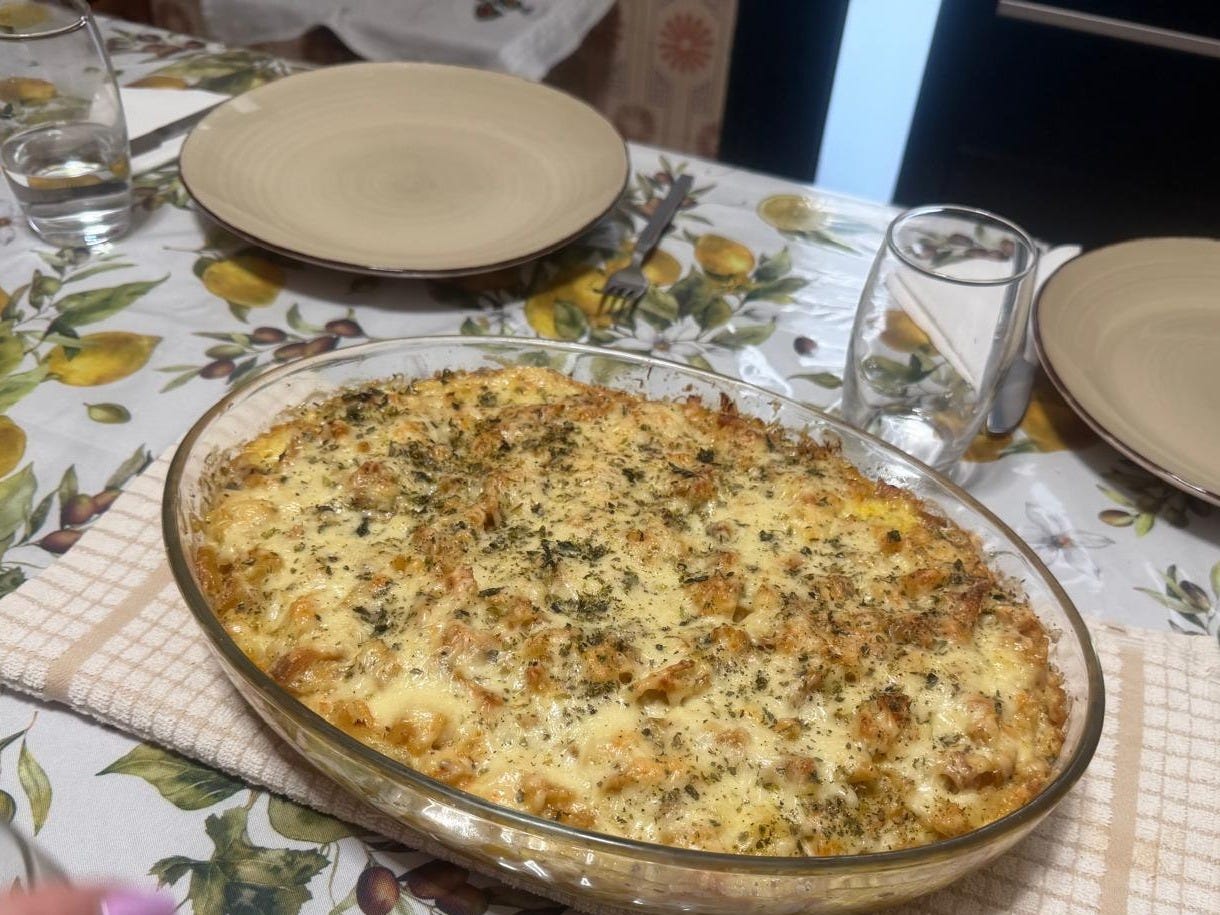
5. Slow is Fast
One thing I always notice in Madeira is that there is far less urgency around time.
Some nights dinner was ready at 7:30 PM. Other nights it was ready at 9 PM. And yet… nobody cared. Nobody was stressed. Nobody felt like the evening was ruined because things weren’t happening according to some optimized schedule.
And it made me reflect on how much unnecessary pressure many of us place on ourselves every single day.
I’m someone who can very easily create rigid little schedules for myself without even realizing it: dinner by this time, shower by this time, in bed by this time, productive morning tomorrow, repeat. And while routines can absolutely be helpful, I think sometimes we become so hyper-fixated on controlling time that we forget how to actually experience life.
My brother-in-law and sister-in-law both work traditional jobs. It’s not that they live outside the reality of schedules and responsibilities. But there is still a softness to the way they move through life that feels very different from the constant sense of urgency I grew up around.
And ironically, they are somehow more productive than I am. This is what I mean by slow is fast. When you are working in a state of flow rather than a place of pressure, you accomplish things more smoothly, you are more regulated, and hence, you get more done.
6. Community might be one of the greatest forms of security
As I spend time with my in-laws, I see how embedded the community is in their lifestyle. It is so natural for them to trade food, skills, knowledge, favors, plants, tools, and support each other. I, on the other hand, don’t even know my neighbor’s name!
And watching them made me realize how protective and resilient that kind of lifestyle is, especially during uncertain times.
Recently, I listened to Professor Jiang — who has become well known online for making several geopolitical predictions that have since come true — talk about how, if global instability continues increasing, one of the smartest things people can do is strengthen smaller communities and become less dependent on larger systems for daily needs.
This really caught my attention because it aligns so closely with the Human Design conversations around “the new paradigm” — this idea that we are slowly moving away from dependence on large institutions and back toward local community, individual skills, and mutual support.
And while so many of us are still trying to figure out what that looks like… I feel like my family in Madeira is already living it. They do not feel the impact of rising oil prices or grocery store prices the way a lot of us do, because instead, they have built their own smaller protective network of connections and support.
While I can’t have a farm (for now), there are a lot of little steps I can take to live more like my in-laws and embrace more of these lessons! I have mentioned a few of these in essays before, but some of the things I’m working on are:
Fostering a deeper sense of community in Lisboa
Practicing more presence and slowness in my life
Learning to make more food from scratch
Focusing more on crafts and skills that light me up
Focusing less on following a timed schedule and listening more to my body, and my natural rhythm
Leaning into more traditions with my boyfriend ( like playing card games some evenings)
Spending more time creating than consuming!
Creating to create! Not for performance or perfection.
Buying more food from the farmers’ market
If you are interested in visiting Madeira, here are some tips from a wannabe local (and her local advisors):
Hikes
Don’t book the hikes weeks in advance. Madeira weather changes erratically, and it is better to book the hikes once you are there, a day or 2 before.
Some of the most famous hikes are beautiful, but also extremely crowded. It kinda ruins the vibe, in my opinion, so go for the less famous trails.
Here are two of my favorite, less touristy trails:
PR17 Caminho do Pinaculo e Folhadal: This one is medium/hard and will include “infinity stairs” and last around 7 hours.
Levada do Moinho-Levada Nova: This is technically two trails in one, but it’s pretty easy and will take about 3 hours.


Carrinhos do Monte
I enjoyed this so much, but it depends on your preference. This is “one of the world’s 7 coolest ways to commute,” and before it became a tourist attraction, it used to be the way they carried bananas down the mountains. I’d recommend googling the days that cruises are docking and trying to go on a non-cruise ship day because all the tourists from the cruises love to do this! The ideal time to go is around 3-4 pm because it’s a little less crowded. However, keep in mind that they close at 6, but if the cue is already huge at 5, they will stop selling tickets!


Touristy places worth seeing
Fanal Forest: It feels like walking into a fairy tale, filled with mist everywhere and ancient twisty trees! (first pic)
The natural pools: These are so fun to spend the day in! They are pools that were naturally formed at the edge of the ocean, and if you sit at the edge, you will even get hit by the ocean waves (my favorite part). (middle row pics)
Santana houses (“casinhas”): These are the old traditional houses in Madeira, and they are pretty cool to see, and also free. (second pic)
The cable car: It has beautiful views, and a perfect way to get to the top of the mountain in Funchal, which is where you’ll find the Carinhos do Monte, btw. (third pic)
Paul da Serra viewpoints: This area is just so special, filled with hikes, and beautiful viewpoints if you just want to drive around (but drive carefully — fog and cows are real hazards there😅 ). (last row of pics)


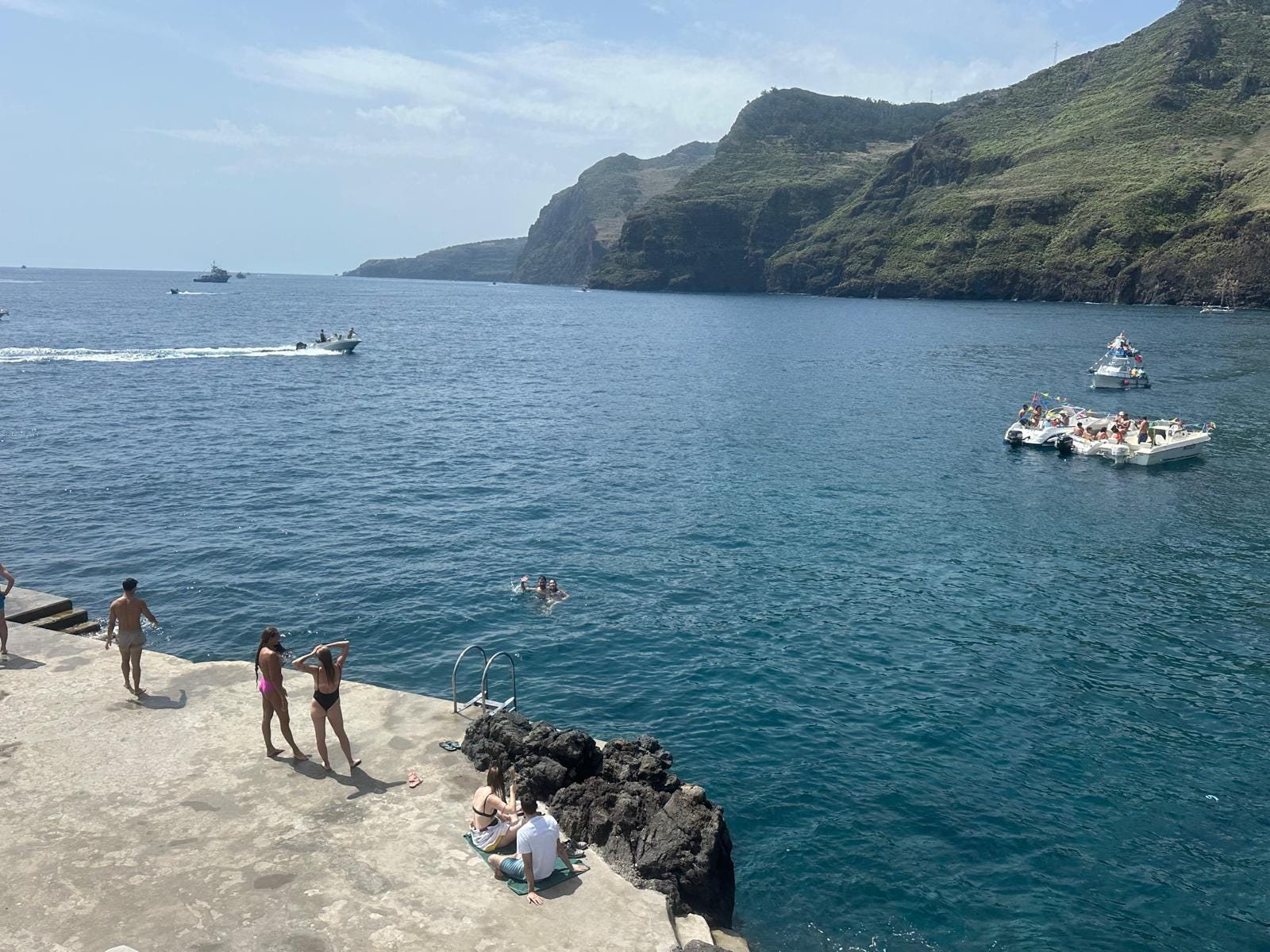
My favorite beach: Praia de Pedra de Eira, Canical
This beach is not as touristy, and I think it’s just such a fun beach. I especially love jumping off the cliffs into the water, but there are also stairs to access the water!
Rent a car
Unlike in Lisbon, where I definitely don’t recommend renting a car, I think Madeira is best seen with a car. The island is relatively small, and you can get almost everywhere in 30 minutes by car, and it’s so much easier to get to the hikes, to the viewpoints, and everything in between this way. They have also upgraded the roads a lot and have made it much easier (and safer) for foreigners to drive through the island.
Madeira’s microclimates are REAL
You can experience sunshine, rain, fog, heat, chill, and wind all within the same day, depending on where you are on the island. Always bring layers!! Also, Madeira usually doesn’t get truly warm until late June, but the warmer weather tends to last well into October.
Ribeira Brava
This is such an underrated area in Madeira, and sooo beautiful to drive around and just look at the scenery around you. You can drive to the plaza and grab a coffee or take a walk along the ocean, then drive up the hills and be blown away by the gorgeous scenery, and make a stop at my favorite Poncha place, Taberna de Serra, before driving higher up into the mountains for a hike or even just the viewpoints. The pics below tell the story better than I!


Foods to try: These are traditional drinks and foods that are very hard to find outside of Madeira (including Lisbon!)
Poncha: This is a traditional Madeira alcoholic drink, made from aguardente (sugar cane alcohol), honey, and lemon juice. They have different variations, and my absolute favorite is Poncha de Maracuja (passion fruit). Look for places (like Taberna de Serra) where they make it fresh and on the spot rather than serve you a “premade” one. In the more traditional, less touristy sites, they serve it with a little snack at no extra charge. (see first two pics below)
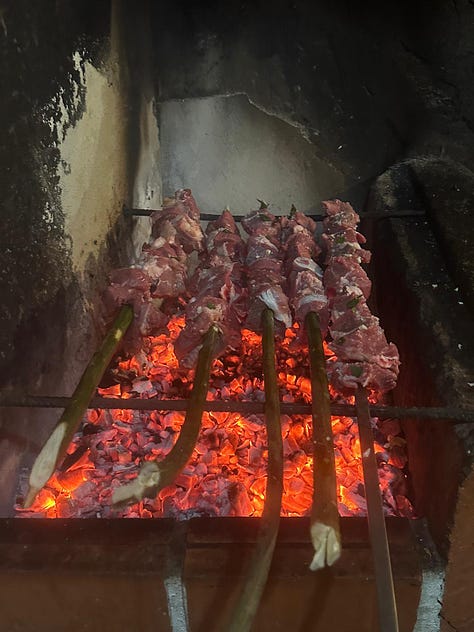
Espetada: This is probably the most famous plate to order in a Madeira restaurant, and they serve it in a pretty epic way. It’s basically beef skewered on laurel wood branches and grilled over a fire. They keep the seasoning super simple, and because of the way they source their meat there (free range cows in the mountains), and the way that it is cooked…. It’s delicious!! (third pic)
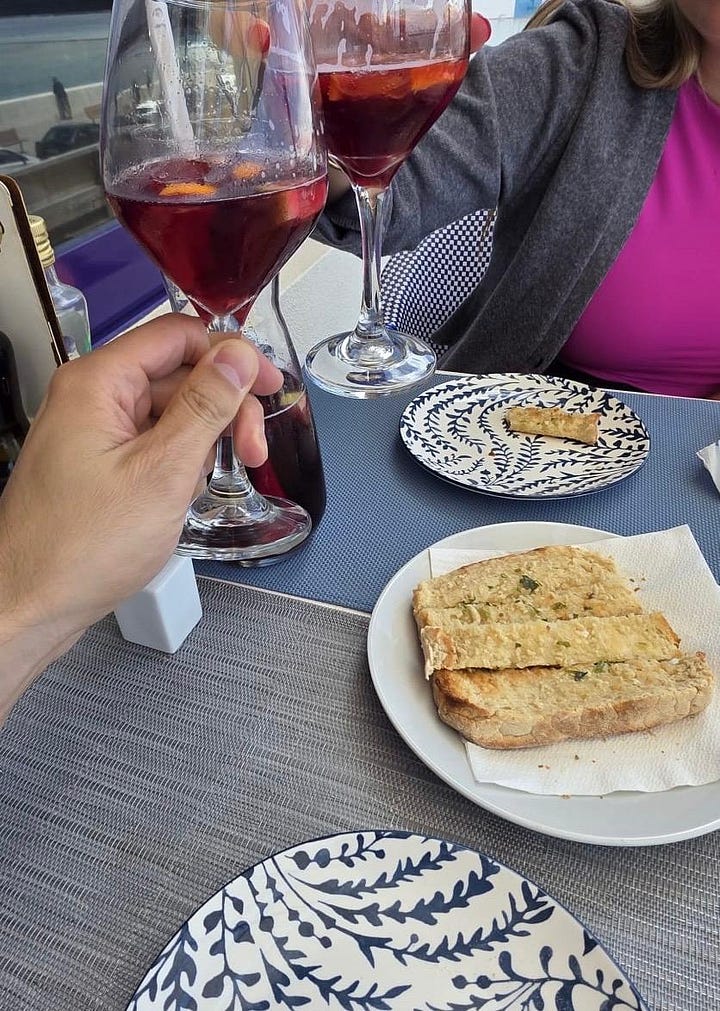
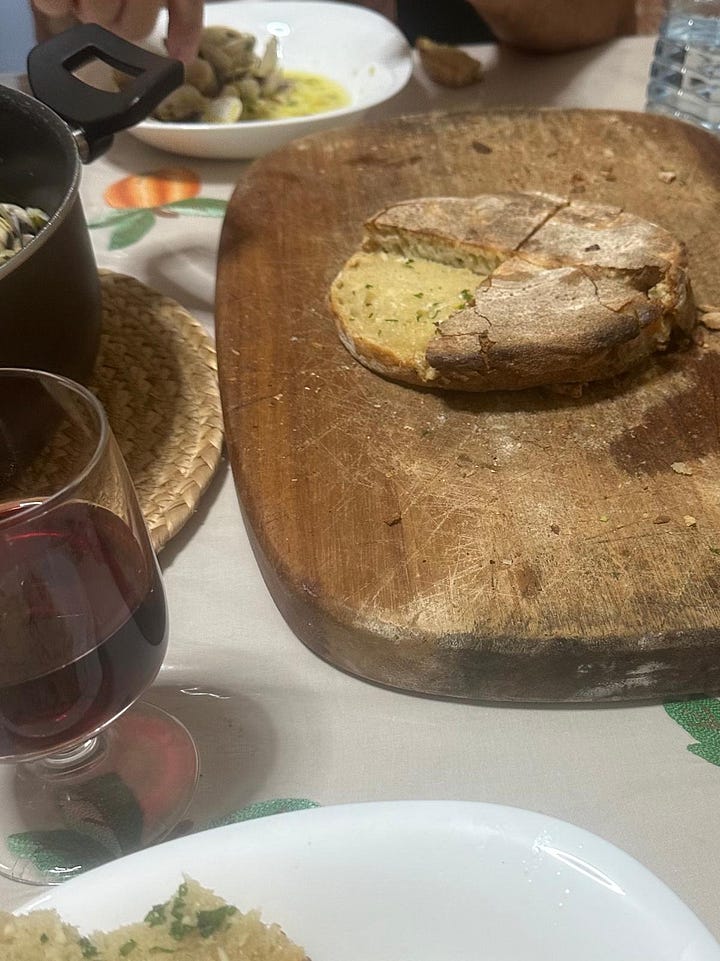
Bolo do caco: This is a flat bread made with sweet potato and a garlic butter and parsley spread over it. I could literally eat this all day! (fourth+ fifth pic)
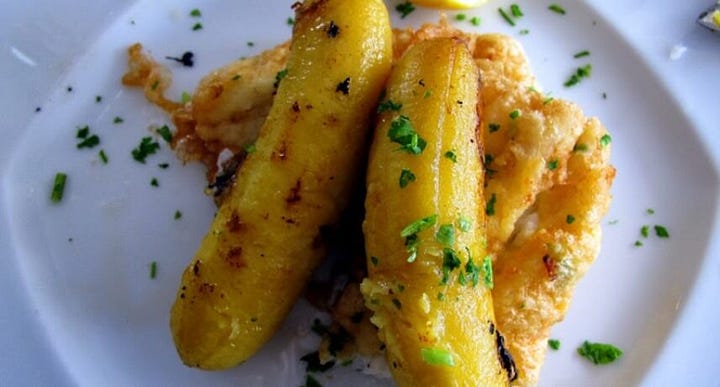
Black scabbard fish with banana (espada com banana): This is madeiras national dish, and it is so delicious!! They use Madeira-grown bananas for this! (sixth pic)
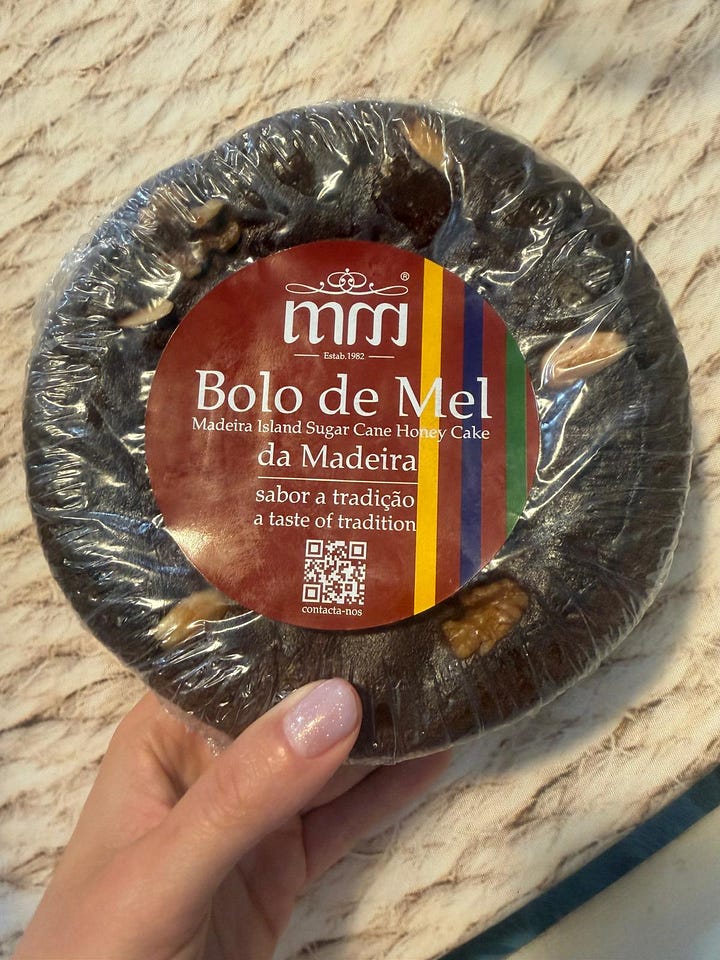
Bolo de mel (Honey cake): This is the infamous cake version of the traditional cookies I made with my in-laws, and you can only buy this in Madeira, you won’t find it in the mainland of Portugal. It is such a sweet delight and definitely worth a try! (last pic)
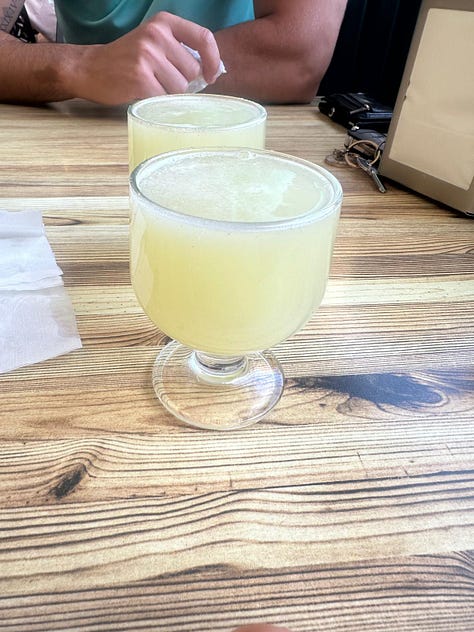
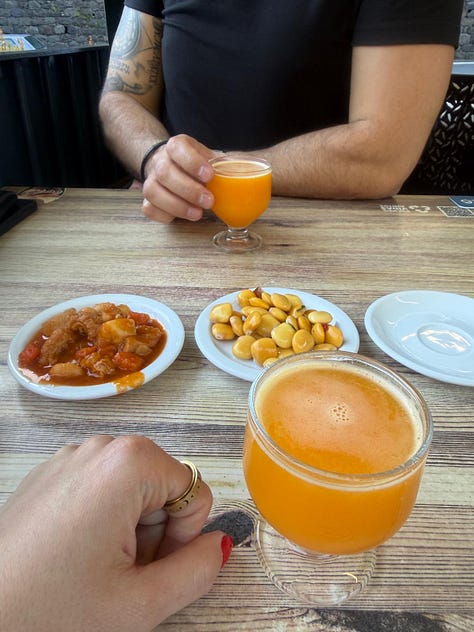
First pic is the original Poncha, and second pic is the Maracuja one with the little snacks they give.


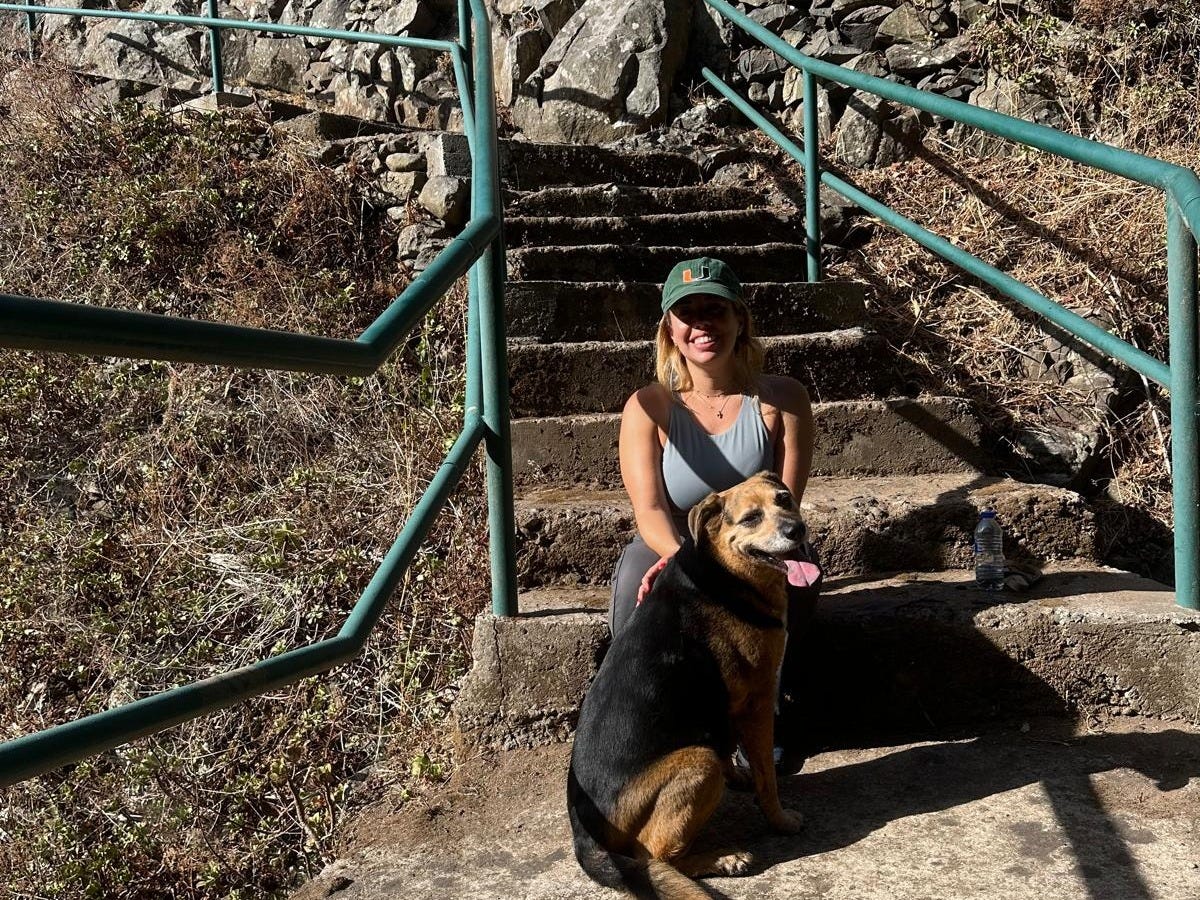
Lucy, my favorite Madeiransa dog, just wanted to say hi before this post comes to an end 🐕 Hope you guys have enjoyed this post, I could talk endlessly about Madeira, but this article is already too long 😅. Would love to know about your favorite parts in the comments below =)
If you’re interested in knowing more about Portugal, I’ve linked a few more of my articles below =)


This was such a wholesome, wonderful read Lia! I enjoyed every moment from what you learned to the different places to visit in Madeira. I also loved the pictures of all the food! There is nothing I love more that trying food from different cultures and places.
Lia, thank you for writing this. It felt so wholesome to read your piece! I can see how much time, effort and dedication you put in your pieces; almost as if a small part of your soul finds its way into these articles!
I paused at several sentences, but this one hit me deeply: "I think many of us were raised in such a performance-based society that we constantly feel pressure to optimize, perfect, and prove ourselves."
As someone who grew up under a lot of pressure to excel at everything, I've noticed that if I don't achieve something the first time I try it, I'm ready to give up. But that's not how you learn things in life, unfortunately ahah...
Another aspect you described beautifully is the sense of community. I think we're becoming more disconnected from each other, which leads to increasing loneliness and declining mental health. My dream is to live in a place surrounded by a beautiful, kind and welcoming community.
Finally, Lucy is a very cute dog haha <3